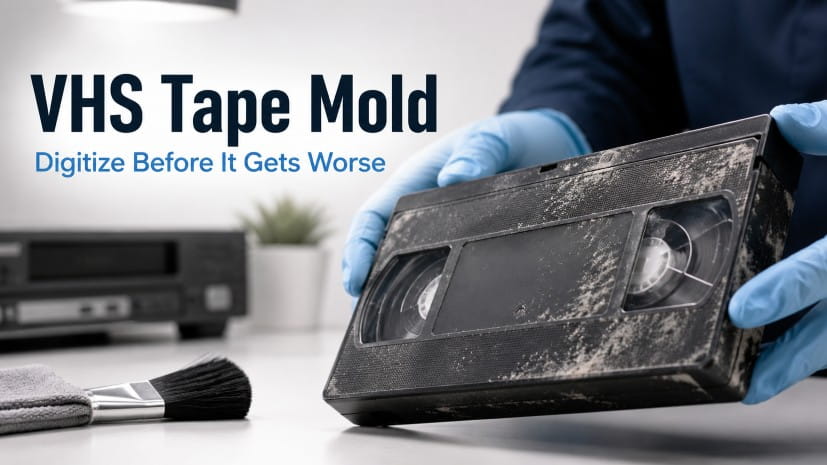
VHS tape mold can be scary to find, especially if the tape contains family memories, weddings, birthdays, vacations, school events, or footage you cannot replace.
If you see white, gray, dusty, or fuzzy-looking spots on the tape, inside the cassette window, or around the tape shell, do not ignore it. Mold can spread, damage the tape, and contaminate playback equipment.
The good news is that a moldy VHS tape is not always hopeless. If the mold is not too severe, careful digitizing may still be possible. But the longer the tape sits, the greater the risk that the damage becomes permanent.
What Does Mold on a VHS Tape Look Like?
Mold on a VHS tape may look like white, gray, or powdery spots. Sometimes it appears around the edges of the tape reel. Other times it may be visible through the clear window of the cassette shell.
You may also notice a musty smell when you open the box or cassette case. That smell can be a warning sign that the tape has been stored in a damp or humid environment.
Common signs of VHS tape mold include:
- White or gray fuzzy spots on the tape.
- Powdery residue inside the cassette shell.
- A musty or moldy smell.
- Tapes stored for years in a garage, attic, basement, closet, or storage unit.
- Playback problems such as lines, distortion, jumping, or bad tracking.
If you are not sure whether the tape has mold, it is better to be cautious before trying to play it.
Should You Play a Moldy VHS Tape?
If you see visible mold on a VHS tape, it is usually best not to play it repeatedly.
Playing a moldy tape can spread mold through the tape path and into the VCR. Once mold gets into the equipment, it can contaminate the machine and potentially affect other tapes played afterward.
A moldy tape can also drag, stick, squeak, shed material, or play poorly. If the tape is already fragile, repeated playback can make the damage worse.
One quick test play may not always destroy a tape, but if the tape is visibly moldy or important, it is better to stop and have it evaluated before continuing.
Can a Moldy VHS Tape Still Be Digitized?
Sometimes, yes. A moldy VHS tape can sometimes still be digitized if the mold is not too severe and the tape is still physically stable.
At Quick Digitals, we can carefully digitize moldy tapes when the condition allows it. If the mold is light or limited, there may still be a good chance of saving the footage.
However, every tape is different. Some tapes can be digitized with care, while others may be too damaged to safely recover.
The result depends on several things:
- How much mold is on the tape.
- How long the mold has been there.
- Whether the tape coating is still intact.
- Whether the tape moves smoothly inside the cassette.
- Whether the tape has already started shedding or flaking.
- Whether the tape has been exposed to moisture, heat, or poor storage for years.
The sooner a moldy tape is inspected and digitized, the better the chance of preserving what is on it.
When Mold Damage Becomes Permanent
Mold is not just a cosmetic problem. It can affect the tape surface and the magnetic coating where the video and audio information is stored.
If the black magnetic layer starts shedding, flaking, sticking, or coming apart, recovery becomes much harder. In severe cases, the recording may not be fully recoverable.
This is why waiting can be risky. A tape with light mold today may become much worse after more time in a humid garage, attic, basement, or storage unit.
Once the tape coating is badly damaged, there may be no way to fully restore the original recording.
What Causes Mold on VHS Tapes?
Mold usually develops when tapes are stored in damp, humid, or poorly ventilated places for long periods of time.
Common storage areas that can create mold risk include:
- Garages
- Basements
- Attics
- Storage units
- Sheds
- Closets near moisture
- Boxes exposed to humidity or water damage
Humidity is one of the biggest causes. If the air is damp enough for long enough, mold can begin growing on surfaces, including old magnetic tapes.
This is especially common in humid states and coastal areas, but it can happen anywhere if tapes are stored in the wrong conditions.
Does This Only Happen to VHS Tapes?
No. VHS tape mold is a common problem, but mold can affect many types of magnetic tapes.
Similar damage can happen to:
- VHS-C tapes
- Hi8 tapes
- Digital8 tapes
- 8mm camcorder tapes
- MiniDV tapes
- Betamax tapes
- Audio cassettes
- Other magnetic tape formats
Each format is different, but they all rely on tape moving smoothly through playback equipment. Mold, moisture, dirt, and tape deterioration can make playback risky or impossible.
What You Should Do If You Find Mold on a VHS Tape
If you find mold on a VHS tape, the most important thing is to avoid making the problem worse.
Here are a few steps to take:
- Do not keep playing the tape repeatedly.
- Keep the moldy tape away from other tapes if possible.
- Do not place it into a VCR you care about unless you understand the risk.
- Do not try harsh chemicals or random DIY cleaning methods.
- Store the tape in a dry area while you decide what to do next.
- Have the tape evaluated for digitizing as soon as possible.
Trying to clean a tape the wrong way can cause more damage. If the footage matters, it is better to be careful.
Why Digitizing Quickly Matters
Old tapes do not heal over time. Mold usually gets worse if the tape stays in the same humid or damp conditions.
Digitizing the tape gives you a chance to preserve the footage before the original tape deteriorates further. Once converted, your memories can be saved as digital files and backed up on a USB drive, computer, external hard drive, or cloud storage.
Digitizing now can help protect your memories before:
- Mold spreads further across the tape.
- The magnetic coating starts to shed or flake.
- The tape becomes sticky or unstable.
- The picture becomes distorted.
- The audio becomes weak or unstable.
- The tape jams, breaks, or becomes unplayable.
If the tape contains something important, waiting is usually the bigger risk.
How Quick Digitals Can Help With Moldy VHS Tapes
Quick Digitals helps customers convert old video tapes to digital files, including some tapes with mold or storage-related damage when the condition is not too severe.
We handle formats such as VHS, VHS-C, Hi8, Digital8, 8mm, MiniDV, camcorder tapes, Betamax, and audio cassettes. We offer digital file options including USB, cloud download, and DVD.
If your VHS tape has mold, we can evaluate it and digitize it carefully when possible. The sooner the tape is handled, the better the chance of preserving the footage before the damage gets worse.
For customers near Glendale, Burbank, Pasadena, Los Angeles, and surrounding Southern California areas, local drop-off is available. For customers outside the area, nationwide mail-in service is available.
Don’t Wait Until the Tape Is Too Damaged
Mold on a VHS tape does not always mean the tape is lost, but it does mean you should act carefully and quickly.
If the mold is light and the tape is still stable, digitizing may still be possible. If the tape continues to sit in humid conditions, the damage may become permanent.
Once the tape coating starts flaking, shedding, or coming apart, there may be no way to fully save the recording.
If your VHS tape has mold, now is the time to get it checked and converted before the damage gets worse. Quick Digitals can help you preserve your memories while the tape is still recoverable. Click here to get started.