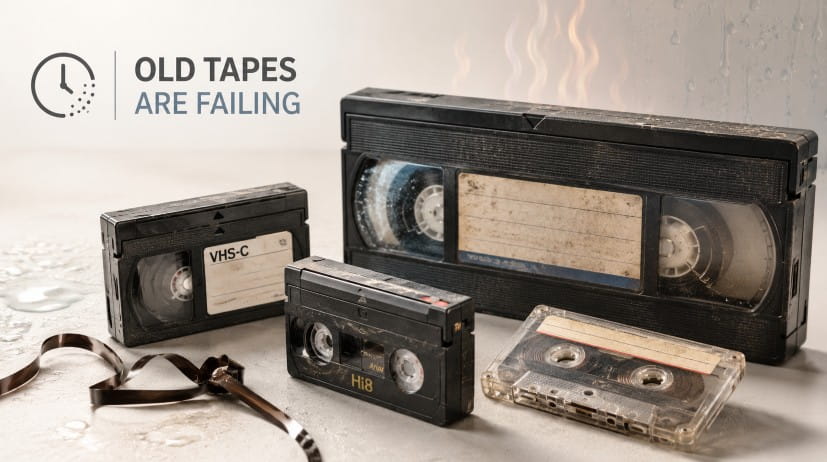
Old camera tapes and VHS tapes are starting to fail because they were never designed to last forever. Many tapes from the 1980s, 1990s, and early 2000s are now old enough to have storage problems, playback issues, mold, heat damage, or magnetic tape deterioration. This does not only apply to VHS. It can also affect VHS-C, Hi8, Digital8, 8mm camcorder tapes, MiniDV, Betamax, audio cassettes, and other magnetic tape formats. If your tapes contain weddings, birthdays, vacations, school events, childhood memories, business footage, or recordings of family members who are no longer here, it is better to digitize them before the tapes continue to age.
Why Old Camcorder Tapes and VHS Tapes Are Failing
Video tapes are magnetic media. The picture and sound are stored on a thin magnetic coating inside the tape. Over time, that coating can break down, become unstable, shed, flake, or become harder to play correctly. The tape may look normal from the outside, but the inside can still be aging. A VHS tape, VHS-C tape, Hi8 tape, Digital8 tape, MiniDV tape, or audio cassette can sit in a box for decades and slowly deteriorate without anyone noticing. Common reasons old tapes start failing include:- Age-related magnetic tape deterioration.
- Humidity and moisture exposure.
- Mold growth.
- Heat damage from garages, attics, cars, or storage units.
- Cold weather and seasonal temperature swings.
- Dust, dirt, and poor storage conditions.
- Plastic cassette shell problems.
- Old playback equipment becoming harder to find.
Magnetic Tape Does Not Last Forever
VHS tapes and camcorder tapes store video and audio on magnetic tape. That tape is very thin and delicate. It has to move smoothly through playback equipment in order to be captured correctly. As magnetic tape ages, it can become less stable. The tape may stretch, stick, squeak, shed material, or play with distortion. Sometimes the damage shows up as lines across the video, unstable tracking, weak audio, or sections that will not play correctly. Once the magnetic layer becomes badly damaged, there may be no way to fully restore the original recording.Tapes From the 1990s Are Now Decades Old
Many people still think of 1990s tapes as “not that old,” but those tapes are now decades old. A family video recorded in 1994, 1997, or 1999 has already been sitting for more than 25 years. Even tapes from the early 2000s are getting older. MiniDV, Digital8, and Hi8 camcorder tapes from that time period may still look fine, but the tape inside is aging. This is why old camcorder tapes should not be ignored. They may contain important memories, but they are still physical media with a limited lifespan.Humidity and Mold Can Damage Old Tapes
Humidity is one of the biggest threats to old tapes. When tapes are stored in damp or humid places, mold can begin to grow on the tape surface or inside the cassette shell. Mold can cause serious problems because it can spread, contaminate equipment, and damage the tape coating. If the black magnetic layer starts shedding or flaking, the video or audio may become impossible to fully recover. This can happen to many formats, including:- VHS tapes
- VHS-C camcorder tapes
- Hi8 tapes
- Digital8 tapes
- 8mm camcorder tapes
- MiniDV tapes
- Betamax tapes
- Audio cassettes
Heat Can Speed Up Tape Damage
Heat can also damage old video tapes and audio cassettes. Many tapes spend years in garages, attics, sheds, storage units, or cars where temperatures can become extremely high. Heat can affect the tape, the plastic shell, and the internal parts of the cassette. Over time, tapes may become sticky, warped, unstable, or harder to play safely. Signs of heat-related tape problems can include:- Lines or distortion during playback.
- Tracking problems.
- Weak or uneven audio.
- Tape sticking or dragging.
- Warped plastic cassette shells.
- Tapes that jam, squeak, or stop during playback.
Cold Weather and Seasonal Changes Can Also Cause Problems
Cold weather alone may not instantly destroy a tape, but years of seasonal temperature changes can create problems. Tapes stored in garages, basements, attics, or storage units may go through freezing winters, warm summers, and changing moisture levels. Those repeated changes can affect the tape and the cassette shell. Condensation can also become a risk when cold tapes are brought into a warmer room. Moisture, temperature swings, and age can all make old tapes harder to play safely.Small Camcorder Tapes Can Be Especially Delicate
Customers often call these “camera tapes,” but the more accurate term is camcorder tapes. These include VHS-C, Hi8, Digital8, 8mm, and MiniDV tapes. Small camcorder tapes can be especially delicate because the tape is compact and tightly wound inside a smaller cassette shell. If the tape is damaged, jammed, moldy, or unstable, playback can become risky. These tapes may contain some of the most important family memories because they were often used for home videos, vacations, birthdays, school events, and everyday family moments.Old Playback Equipment Is Becoming Harder to Find
Another reason to digitize old tapes now is that working playback equipment is becoming harder to find. VCRs, camcorders, MiniDV decks, Digital8 camcorders, Hi8 players, and other tape playback machines are no longer common household devices. Many are old, worn out, or difficult to repair. Even if your tape is still playable, you still need working equipment to capture it. As the years go by, both the tapes and the machines needed to play them become harder to rely on.Signs Your Old Tapes May Be Starting to Fail
You may not know a tape has problems until it is played. But there are warning signs that your tapes may be at risk. Look out for:- White, gray, or fuzzy mold spots.
- A musty or chemical smell.
- Tapes stored in a garage, attic, basement, shed, car, or storage unit.
- Plastic shells that look cracked, warped, or damaged.
- Tapes that squeak, stick, or do not move smoothly.
- Playback with lines, distortion, jumping, or bad tracking.
- Audio that cuts in and out.
- Tapes that stop, jam, or refuse to play.
Why Digitizing Old Tapes Matters
Digitizing old tapes helps preserve the video or audio before the original tape becomes harder to play. Once the tape is converted to digital files, you can save copies on a USB drive, computer, external hard drive, or cloud storage. Digital files are also easier to share with family. Instead of relying on one aging tape, you can make backups and keep the memories in multiple places. Digitizing helps protect your memories before:- The tape becomes too damaged to play safely.
- Mold spreads further.
- Heat or humidity causes more deterioration.
- The tape coating sheds or flakes.
- Playback equipment becomes harder to find.
- The recording becomes impossible to fully recover.