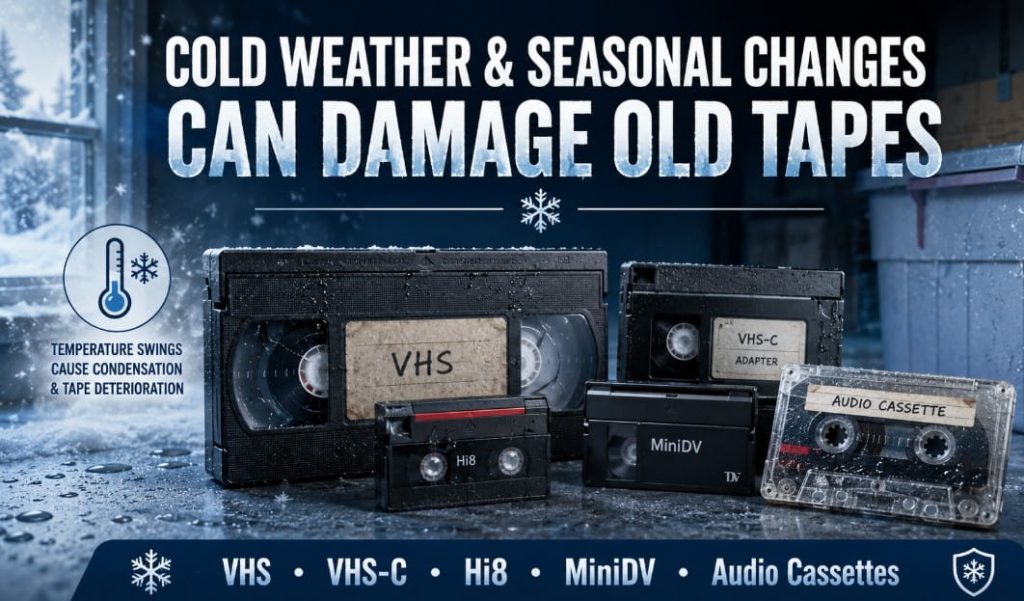
Cold weather tape damage is a real concern for old video tapes and audio cassettes, especially when tapes have been stored for years in garages, basements, attics, closets, or storage units.
Many people think heat and humidity are the only things that can damage tapes, but cold winters and seasonal temperature changes can also create problems. This can affect VHS, VHS-C, Hi8, Digital8, 8mm, MiniDV, Betamax, and audio cassettes.
If your tapes contain family memories, weddings, birthdays, vacations, school events, business footage, or recordings you cannot replace, it is better to digitize them before years of temperature swings make the damage worse.
Why Cold Weather Tape Damage Happens
Video tapes and audio cassettes are made with thin magnetic tape inside a plastic shell. That tape was not designed to sit for decades in changing temperatures.
Cold weather by itself may not instantly destroy a tape, but long-term storage in cold conditions can still cause problems. The bigger issue is often the constant change between cold and warm temperatures throughout the year.
When tapes are stored in places like garages, basements, attics, sheds, or storage units, they may be exposed to years of freezing winters, warmer summers, and changing indoor moisture levels.
Over time, this can lead to:
- Moisture or condensation near the tapes.
- Changes in the tape shell or internal parts.
- Playback issues such as jumping, lines, or distortion.
- Tape sticking, squeaking, or moving unevenly.
- Weak or unstable audio.
- More risk of mold if moisture is present.
The tape may look normal from the outside, but the material inside may already be aging.
Seasonal Changes Can Be Worse Than Cold Alone
One of the biggest problems for old tapes is not just cold weather. It is the repeated change from cold to warm and back again.
In states with strong seasonal changes, tapes may go through freezing winters, damp springs, hot summers, and cooler falls. This constant cycle can be hard on old magnetic media.
This is especially important for people living in states such as:
- Michigan
- Illinois
- Ohio
- Pennsylvania
- New York
In these areas, many families store old tapes in basements, garages, closets, attics, or storage units for years. Even if the tapes are not directly exposed to snow or water, seasonal temperature swings can still affect them over time.
Condensation Can Create Extra Risk
Condensation is one of the hidden dangers of cold-weather tape storage.
If tapes are stored in a cold area and then brought into a warmer room, moisture can form on or around the tape. This is similar to what happens when a cold drink sweats on a warm day.
Moisture is bad for old tapes because it can contribute to mold, sticking, tape instability, and playback problems. If a tape has been sitting in a cold garage or storage unit, it should not be played immediately after being brought into a warm room.
It is better to let the tapes adjust to room temperature before handling or playing them.
This Applies to More Than VHS Tapes
Cold weather tape damage can affect many different formats, not just VHS.
Old magnetic tape formats include:
- VHS
- VHS-C
- Hi8
- Digital8
- 8mm camcorder tapes
- MiniDV
- Betamax
- Audio cassettes
- Other magnetic tape formats
Each format is built differently, but they all depend on tape moving smoothly through playback equipment. If the tape becomes unstable, dirty, sticky, warped, or damaged, the recording may become harder to recover.
Small camcorder tapes like VHS-C, Hi8, Digital8, and MiniDV can be especially delicate because the tape is compact and tightly wound inside a smaller shell.
Why You Should Digitize Before More Damage Happens
Old tapes do not improve with time. Even if they have been sitting untouched for years, they are still aging.
Digitizing old tapes helps preserve the content before the original tape becomes harder to play. Once converted, the videos or audio recordings can be saved as digital files and backed up on a USB drive, computer, external hard drive, or cloud storage.
Digitizing now can help protect your memories before:
- The tape becomes harder to play safely.
- The picture becomes distorted or unstable.
- Audio becomes weak, muffled, or cuts out.
- The tape sticks, jams, or breaks.
- Moisture creates mold or other damage.
- The recording becomes impossible to fully recover.
The longer tapes stay in poor storage conditions, the greater the risk.
Signs Your Tapes May Have Cold or Seasonal Storage Damage
You may not know a tape has damage until someone tries to play it. But there are warning signs that tapes may have been affected by bad storage conditions.
Look out for:
- Tapes stored for years in a garage, attic, basement, or storage unit.
- Tapes exposed to freezing winters or hot summers.
- A musty smell or signs of moisture.
- Visible dirt, dust, mold, or residue.
- Tapes that squeak, stick, or do not move smoothly.
- Playback with lines, jumping, distortion, or bad tracking.
- Audio that cuts in and out.
If a tape seems damaged, avoid playing it repeatedly. Repeated playback can sometimes make a bad tape worse.
How to Store Old Tapes More Safely
If you are not ready to digitize your tapes immediately, better storage can help reduce future damage.
Store tapes in a cool, dry, stable indoor environment when possible. Avoid garages, attics, sheds, damp basements, and storage units with major temperature swings.
Helpful storage tips include:
- Keep tapes indoors in a temperature-stable room.
- Avoid damp or humid areas.
- Keep tapes away from direct sunlight.
- Store tapes upright in their cases when possible.
- Do not store tapes near heaters, vents, or windows.
- Let cold tapes adjust to room temperature before playing them.
Better storage can help, but it does not stop aging completely. Digitizing is still the best way to preserve the actual content.
How Quick Digitals Can Help
Quick Digitals helps customers convert old video tapes and audio cassettes to digital files before the tapes continue to deteriorate.
We digitize formats such as VHS, VHS-C, Hi8, Digital8, 8mm, MiniDV, camcorder tapes, and audio cassettes. We offer digital files with options such as USB, cloud download, or DVD.
For customers near Glendale, Burbank, Pasadena, Los Angeles, and surrounding Southern California areas, local drop-off is available. For customers outside the area, including cold-weather states like Michigan, Illinois, Ohio, Pennsylvania, and New York, nationwide mail-in service is available.
If your tapes have been stored for years in a garage, attic, basement, or storage unit, it is better to digitize them sooner rather than later.
Don’t Let Seasonal Storage Damage Ruin Your Memories
Cold weather, moisture, and seasonal temperature changes can all affect old tapes over time. The damage may not be obvious until the tape is played, and by then the recording may already be harder to recover.
If your tapes contain memories you care about, digitizing them now gives you the best chance of preserving the footage before more damage occurs.
Once your tapes are converted to digital files, you can make backups, share them with family, and protect the memories even if the original tapes continue to age.
Old tapes were not made to last forever. Digitizing them while they are still playable is the safest way to preserve what is on them.