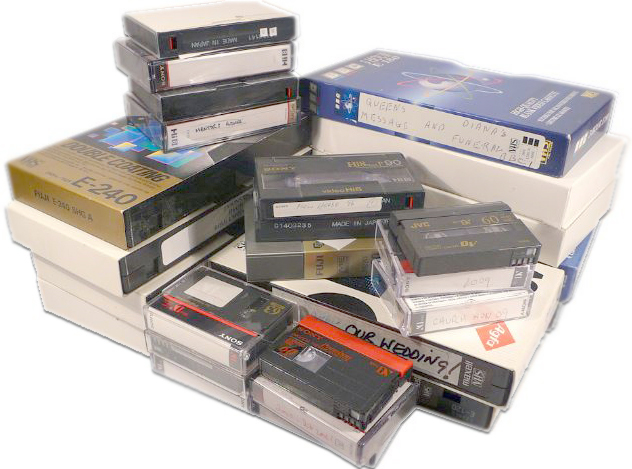
Types of video tapes can be confusing because many formats look similar, especially older camcorder tapes. Customers often find a box of tapes and are not sure if they have VHS, VHS-C, Video8, Hi8, Digital8, 8mm, MiniDV, or something else. Knowing the tape format helps you understand what equipment is needed to play it, how fragile the tape may be, and how it can be converted to digital files. This guide explains the most common consumer video tape formats and gives a brief history of how they were used.


Why Video Tape Formats Matter
Old video tapes are not all the same. Some were made for home VCRs, while others were made for handheld camcorders. The format matters because each type of tape usually requires specific playback equipment. A VHS tape needs a VCR. A VHS-C tape may need a VHS-C adapter or compatible camcorder. Video8, Hi8, and Digital8 tapes usually need the correct camcorder or playback device. MiniDV tapes require MiniDV playback equipment. If you try to use the wrong equipment, the tape may not play at all. In some cases, forcing old tapes into the wrong adapter or machine can cause damage.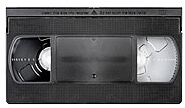
VHS Tapes
VHS stands for Video Home System. VHS became one of the most common home video formats and was widely used for recording TV shows, home movies, family events, weddings, birthdays, school events, and business footage. VHS tapes are larger than most camcorder tapes. They usually have two visible reels inside a black plastic cassette shell and a large label area on the front or spine. VHS tapes were commonly played in VCRs and were one of the most familiar video formats for families throughout the 1980s, 1990s, and early 2000s. Even though VHS tapes are physically larger than many camcorder tapes, they can still deteriorate over time. VHS tapes can develop mold, tracking problems, weak audio, heat damage, humidity damage, tape sticking, or playback issues.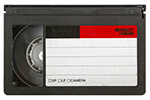
VHS-C Tapes
VHS-C stands for Compact VHS. These tapes were designed for camcorders and are much smaller than regular VHS tapes. VHS-C tapes use the same tape width as VHS, but the cassette shell is smaller. Because of that, many VHS-C tapes can be played in a standard VCR using a VHS-C adapter, as long as the tape and adapter are working properly. VHS-C tapes were popular for family camcorders because they made home video cameras smaller and easier to carry. Because VHS-C tapes are compact, they can be more sensitive to mechanical problems than full-size VHS tapes. If a VHS-C tape is jammed, broken, moldy, or damaged, it should be handled carefully before playback or digitizing.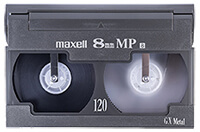
Video8 and 8mm Tapes
Video8, often called 8mm, was a compact camcorder tape format commonly used in handheld video cameras. These tapes are smaller than VHS-C and are not compatible with VHS players or VHS-C adapters. They require a compatible 8mm or Video8 camcorder or playback device. Customers often call these “camera tapes” because they were used in camcorders. They may look similar to Hi8 and Digital8 tapes because those formats use the same general cassette size. Video8 and 8mm tapes can hold important family footage, but they are now aging and require working playback equipment to convert them properly.Hi8 Tapes
Hi8 was an improved version of the 8mm camcorder format. The cassette looks very similar to Video8 and 8mm tapes, but Hi8 was designed to provide better video quality. Hi8 tapes were popular in camcorders during the 1990s and were often used for family videos, vacations, school events, and personal recordings. Because Hi8 tapes look similar to Video8 and Digital8 tapes, customers often have trouble telling them apart. The label on the tape may say Hi8, 8mm, Video8, Digital8, or something similar. Hi8 tapes usually need compatible Hi8 playback equipment to be transferred correctly.Digital8 Tapes
Digital8 was a later camcorder format that used the same general cassette size as Video8 and Hi8, but recorded video digitally. This can be confusing because a Digital8 tape may look almost the same size and shape as a Hi8 or 8mm tape. The main difference is the way the video was recorded and the type of camcorder or playback device needed. Some Digital8 camcorders can also play older Video8 or Hi8 recordings, but not all equipment works with every tape. Compatibility depends on the specific camcorder and recording format. If you are not sure whether you have Video8, Hi8, or Digital8 tapes, a digitizing service can help identify the format and determine the right playback equipment.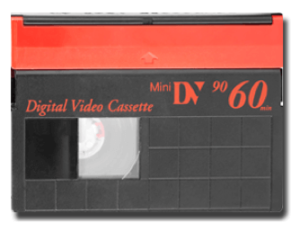
MiniDV Tapes
MiniDV is a small digital video cassette format that became popular in the late 1990s and early 2000s. MiniDV tapes are smaller than VHS-C, Hi8, Digital8, and 8mm tapes. They were commonly used in compact digital camcorders and often produced very good video quality for their time. Regular MiniDV is typically standard-definition digital video. Some later HDV camcorders used MiniDV-style tapes to record high-definition video, but not every MiniDV tape is HD. MiniDV tapes usually require a working MiniDV camcorder or deck for proper transfer. Many MiniDV transfers also require the correct capture setup, often using FireWire or compatible professional equipment. Because MiniDV equipment is becoming harder to find, it is smart to digitize MiniDV tapes before the tapes or playback equipment become more difficult to use.How to Tell Which Tape Format You Have
The easiest way to identify a tape is to look at the label, size, and shape of the cassette. Here are a few quick clues:- VHS: large home video cassette used in VCRs.
- VHS-C: smaller compact VHS cassette, often used in camcorders.
- Video8 / 8mm: small camcorder tape, usually labeled 8mm or Video8.
- Hi8: same general size as 8mm, usually labeled Hi8.
- Digital8: same general size as Hi8 and 8mm, usually labeled Digital8.
- MiniDV: very small digital camcorder cassette.
Why Old Video Tapes Should Be Digitized
All video tape formats can age and deteriorate over time. Even if the tape looks normal from the outside, the magnetic tape inside can become harder to play safely. Old tapes can be affected by:- Heat
- Humidity
- Mold
- Cold storage
- Dust and dirt
- Tape wear
- Weak or missing audio
- Tracking problems
- Playback equipment issues
Which Tape Formats Can Quick Digitals Convert?
Quick Digitals can help convert many common video tape formats to digital files. We digitize formats such as:- VHS
- VHS-C
- Video8
- 8mm camcorder tapes
- Hi8
- Digital8
- MiniDV
- Other supported consumer camcorder tape formats